

The Government has proposed replacing this two-tier system with unitary authorities; single councils that deliver all local services in their area.
- All 15 district, borough, unitary and county councils across Lancashire are developing proposals for future arrangements.
- Various options are under consideration, ranging from two to five new unitary authorities.
- To be accepted, proposals will need to demonstrate:
- Strong local leadership
- Improved service delivery and better outcomes
- Value for money and financial sustainability
- Local economic growth and prosperity
- Protection of community identity and effective local partnerships
The proposals

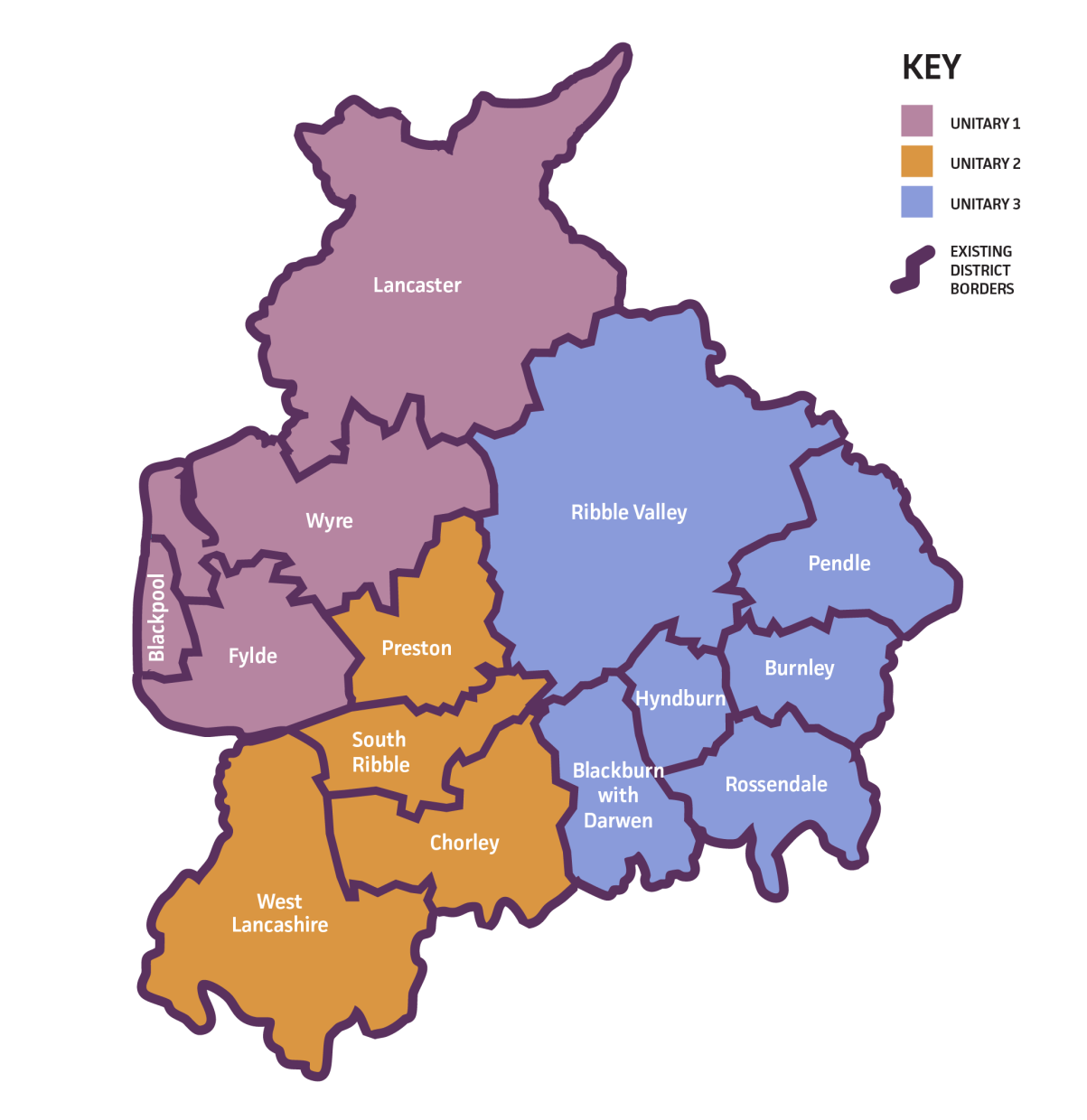
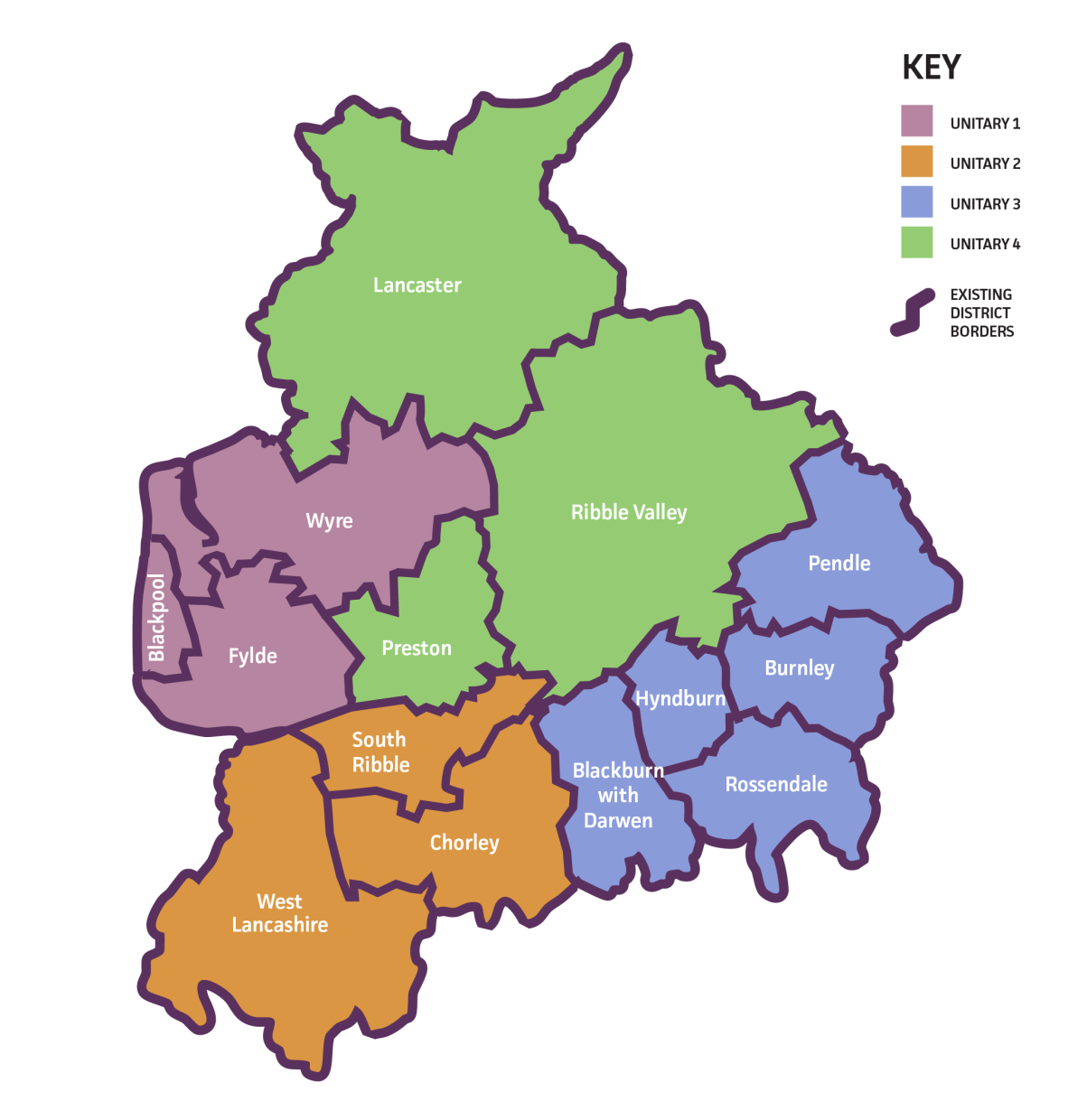

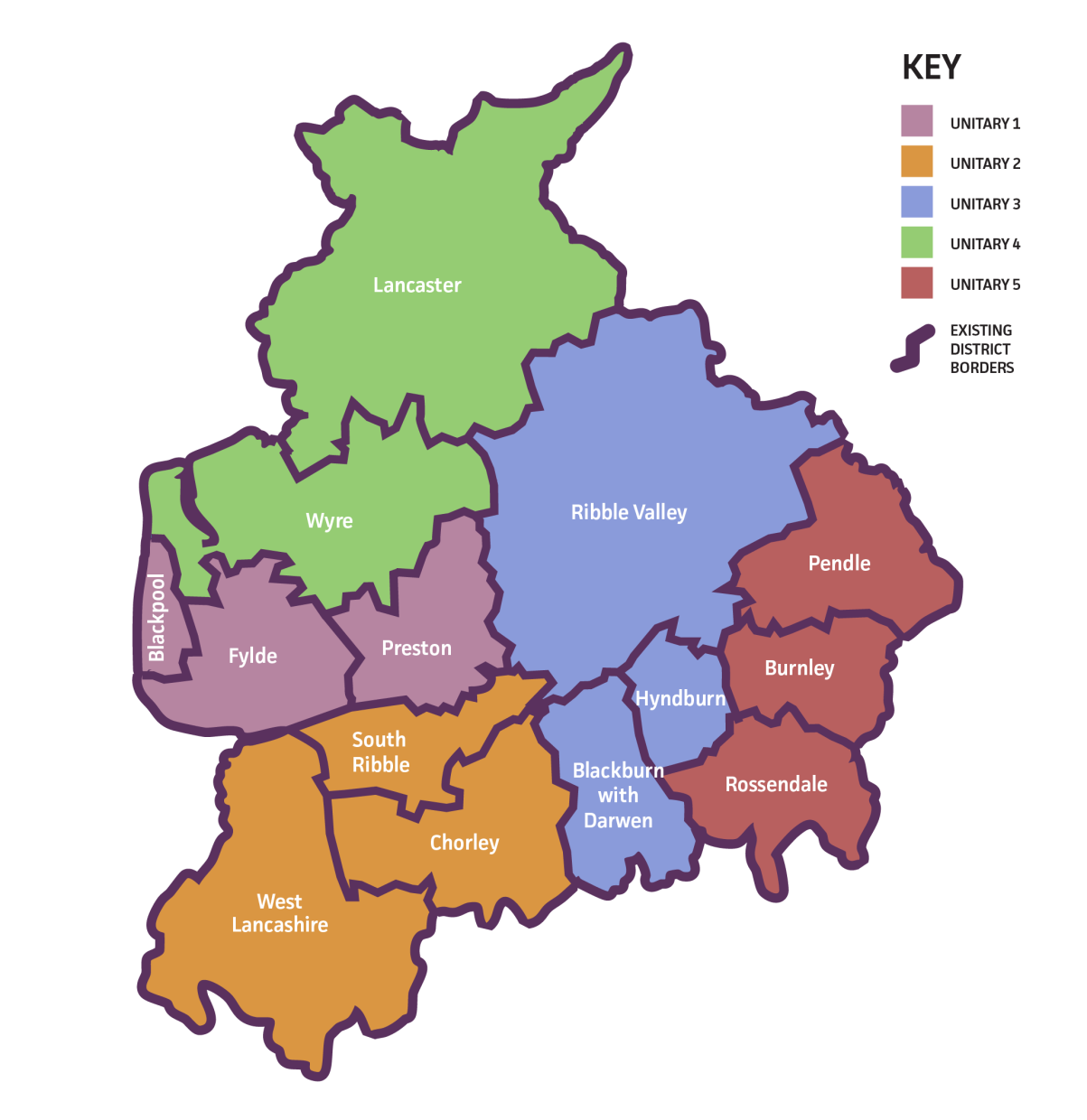
Councils across Lancashire will submit their proposals to government. The deadline for the submission of the proposals is the 28th of November, 2025. Once the final reorganisation proposal is submitted, the government will determine which proposals are most suitable to take forward for further consideration before a decision is made.
Statutory consultation with residents and stakeholders is expected to take place on these proposals in the new year, after which the Minister will decide which option will be taken forward for reorganisation in Lancashire and will outline what the new unitary councils and footprints will look like.
The Minister is expected to determine the preferred option for Lancashire by the summer of 2026. Shadow authority elections could be held in May 2027, and new councils may take full responsibilities from 1 April 2028.
View this short video created to explain what Local Government Reorganisation is, why changes are being considered, and what it could mean for residents.
The documents below form part of the Local Government Reorganisation (LGR) process for Lancashire, Blackburn with Darwen, and Blackpool.
Consultation
A comprehensive consultation programme was undertaken across Lancashire to understand the preferences, concerns and priorities of residents, elected members, businesses, and community organisations.
The Lancashire-Wide Survey
A Lancashire-wide survey explored preferences for the structure of local councils, priorities for reform, and perceived benefits and concerns around local government reorganisation. This exercise generated a strong response, with 13,414 participants submitting feedback and over 346,000 individual questions answered. Stakeholders including residents, councillors, local businesses, voluntary and community organisations, and council staff , expressed deep interest in how reform could maintain local identity, strengthen representation, and ensure effective service delivery
Burnley and Pendle Council’s Focus Groups and Surveys
A wide range of organisations took part in six focus group sessions, with a total of 27 participants representing business, community and voluntary sectors, and parish councils. Overall, there was widespread support for the 5UA model, recognised for its focus on outcomes, efficiency, and giving East Lancashire two voices in the combined authority
It was clear from the survey that the most important council services to local people were roads, including transport and gritting, followed by parks and open spaces ,waste and recycling, leisure facilities and partnerships with the local NHS services.
When asked what mattered most indecisions about local government reorganisation, respondents prioritised good quality services that work well, maintaining or improving local services, and councils that listen to residents, underlining the importance of responsive, place-based service delivery within any future model of governance.
The survey set out the five different options for local government reorganisation in Lancashire. Four in five (80%) respondents preferred the 5UA model serving around 272,000 residents across Burnley, Pendle and Rossendale. Those choosing the 5UA model feel smaller councils are more locally focussed and serve residents and communities better.
Other reasons included an opposition to merging with Blackburn with Darwen and the importance of local voice and representation.
Detailed reports of the focus groups and all surveys can be found in the downloads section below.
The Business Case for 5 Unitary Authorities
This 5UA business case sets out the preferred model for Local Government Reorganisation (LGR) in Lancashire, jointly developed by Burnley and Pendle Borough Councils following extensive analysis and public consultation. It outlines how five new, community focused unitary councils could replace the existing two-tier system to deliver more efficient, locally accountable, and financially sustainable services. The document reflects local feedback, independent assessment, and alignment with government criteria, forming Burnley’s contribution to Lancashire’s collective submission for future governance arrangements. You can download the document below.
Data Packs
Throughout the formulation of the business proposals across Lancashire, local authorities have been using data packs to support the development of each proposal. These data packs include a Financial Baseline Report and a Shared Evidence Base.
Have your say on the future of local government in Lancashire
The government’s public consultation on proposals for Local Government Reorganisation (LGR) in Lancashire closed on 26 March 2026.
The consultation gave residents, businesses and organisations the opportunity to share their views on the proposals before the government makes a final decision.
Responses received during the consultation will now be considered by government.
You can find out more about LGR in Lancashire at www.lancashirelgr.co.uk
