

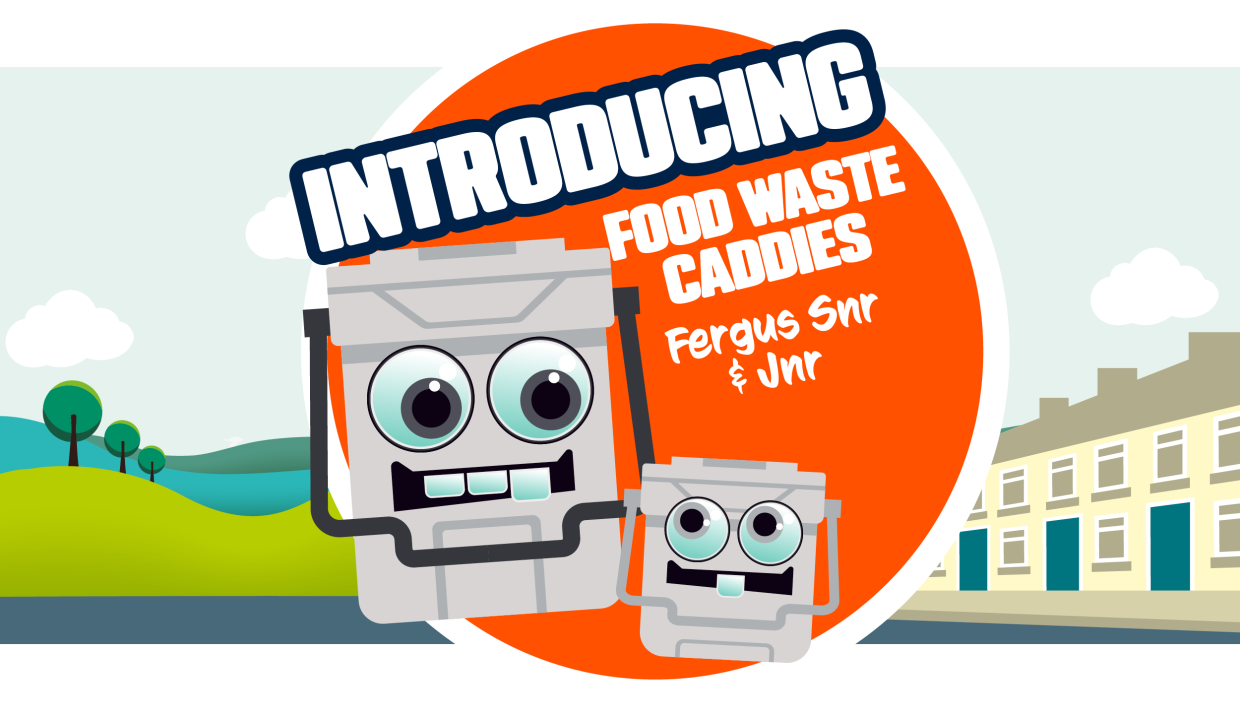
Burnley Council is introducing a weekly food waste recycling collection from the week of 13th-17th April 2026, in line with the Government’s Simpler Recycling reforms.
This change means food waste will be collected separately to improve recycling rates and reduce waste sent to landfill.
Your food waste containers will be delivered to your property ahead of the service starting, along with a leaflet explaining how everything works.
This is not specific to Burnley Council. We want to reduce the amount of waste going to landfill, or incineration, and capture more of this for recycling to support our climate goals.
How to recycle your food waste
- Your food waste will be collected weekly on the same day as your other waste and recycling.
- Place a liner in your kitchen caddy and put your food waste directly into it.
- When your kitchen caddy is full, remove the liner, tie the top and place it into your outdoor food waste bin.
- Please put your outdoor food waste bin out for collection on your normal collection day, making sure the lid is closed using the lockable handle.
What can I put in my food waste caddy?
- All uneaten food and plate scrapings
- Raw meat
- Cooked meat
- Bones
- Dairy products
- Cheese
- Eggs
- Teabags
- Coffee grounds
- Raw vegetables
- Cooked vegetables
- Whole fruit
- Peelings
- Rice
- Pasta
- Beans
- Bread
- Cakes
- Pastries
- Pet food
What cannot go in your food waste caddy?
- Packaging of any kind
- Liquids such as milk
- Oil or liquid fat
- Any material that is not food waste
Please remember to recycle mouldy and out-of-date food. Remove all packaging from ready meals before placing food in your caddy.
Missed Food Waste Collection
If your food waste bin has been missed on your recent scheduled collection, you can report a missed collection here – Missed bin collections – burnley.gov.uk
Ordering New or Replacement Food Waste Caddies
If you require food waste equipment to participate in the service or your existing food waste containers have gone missing, stolen or damaged, you can order equipment here – Your refuse and recycling bins and containers – burnley.gov.uk
Ordering more liners
We are changing the way replacement food waste liners are delivered to participating properties.
To improve efficiency and ensure a consistent supply, replacement liners will now be delivered twice per year instead of being requested by tying a liner to your caddy.
How will this work?
- Each participating property will receive 2 rolls of liners per delivery
- Deliveries will take place twice per year (June and December)
- This equates to approximately one liner every two days, which should meet the needs of most households
June 2026 Liner Delivery
The next delivery will take place during the week commencing 1st June 2026.
December 2026 Liner Delivery
Check back here nearer the time for exact delivery dates!
Collect liners from our Contact Centre
Replacement food waste liners can also be collected from Contact Burnley centre on Parker Lane, BB11 2BY open Monday to Friday from 09:00–12:00 and 14:00–17:00.
FAQs
Why are food waste collections being introduced?
Food waste collections are being introduced due to the Government’s Simpler Recycling reforms. New regulations made under the Environment Act 2021 require councils in England to collect food waste separately from general rubbish.
From 2026, councils must provide a weekly food waste collection for households. This is to make recycling simpler and more consistent across the country, reduce the amount of food waste sent to landfill, and ensure food waste is treated in a more sustainable way. When food waste is collected separately, it can be processed through anaerobic digestion to produce renewable energy and fertiliser, instead of creating harmful methane gas in landfill.
The changes are part of a national effort to improve recycling rates and reduce the environmental impact of household waste.
What if I don’t produce any food waste?
Some people have more food waste than others. At some point, most households will have some unavoidable food waste, such as banana skins, tea bags, plate scrapings, bones from meat, or food that has gone off.
There is no amount too small. The best thing we can do with food is enjoy it, but some waste is inevitable. When food waste is placed in your food waste caddy, it can be recycled in a more sustainable way, helping to create renewable energy.
Will the food in my bin smell?
Food waste bins and kitchen caddies are designed with secure lids to help contain odours. Emptying your kitchen caddy regularly into the outdoor food waste bin and tying the liners will help keep smells to a minimum. The outdoor bin has a sealable, lockable lid which helps prevent odours and reduces the risk of vermin. Weekly food waste collections can also help reduce smells in your general waste bin.
I don’t have time to do this – why should I?
Separating food waste takes very little extra time. You collect it in your kitchen as normal and empty the caddy into your outdoor food waste bin. The benefit is what happens next. Food waste in general rubbish can produce methane, a powerful greenhouse gas. When it is collected separately, it can be recycled to produce renewable energy and fertiliser instead, reducing environmental harm.
Why does the kitchen caddy feel a bit flimsy / out of shape when it arrives?
Kitchen caddies are designed to be lightweight and easy to handle indoors. Many are made from injection-moulded polypropylene and often contain a high proportion of recycled plastic.
Because caddies can be stacked closely during delivery, they may occasionally look slightly out of shape at first. If this happens, leaving the caddy at room temperature for a while (with the lid closed) usually helps it settle back into shape.
